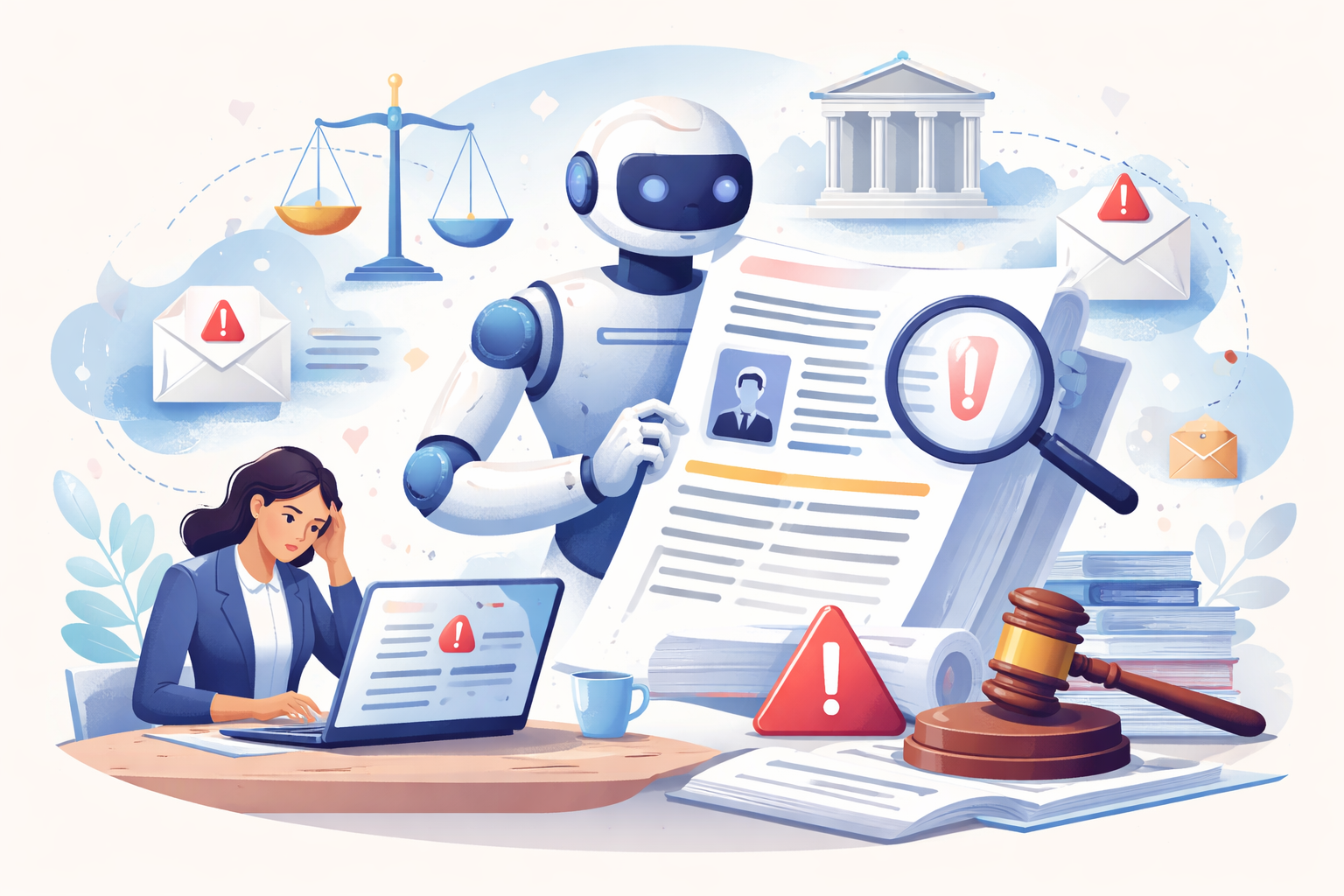
Artificial intelligence tools are now widely used to write content, summarize information, answer questions, and assist with research. While these tools can increase speed and scale, they also introduce a new category of legal risk that many businesses underestimate.
One of the most common problems is what is often called an “AI hallucination.” This occurs when an AI system generates statements that sound confident and factual but are incorrect or entirely fabricated. In a business context, these errors can cross the line from technical flaws into legal liability.
Why hallucinations are not just technical errors
Large language models are designed to predict likely words, not to verify truth. When information is missing or ambiguous, the system may invent names, events, or accusations that appear plausible to readers.
When these statements involve real people or businesses, the risk of defamation arises. If false statements harm someone’s reputation and are shared with others, courts may treat them the same way they would treat any other false publication.
“The AI did it” is not a legal defense
From a legal perspective, AI is treated as a tool, not an independent actor. When a company deploys an AI system and publishes or relies on its outputs, responsibility remains with the business.
This is especially true when AI-generated content is presented as factual, authoritative, or suitable for decision-making. Disclaimers alone may not be sufficient if the overall design encourages trust.
How defamation claims can scale into class actions
When AI systems are used at scale, the same error can be repeated many times. If a system generates similar false statements about multiple people, plaintiffs may attempt to group claims together in class actions.
Even when individual damages appear small, aggregated claims can create significant financial and reputational exposure.
Risk increases with certain use cases
Using AI for brainstorming or creative writing generally carries lower risk than using it for biographies, background checks, legal summaries, or evaluations of real people.
Problems arise when businesses blur this distinction and present AI-generated outputs as reliable sources of truth without human review or clear limitations.
What businesses should focus on
Companies using AI should think carefully about how outputs are generated, reviewed, labeled, and published. Guardrails, human oversight, and clear user expectations are increasingly important from both a legal and trust perspective.
Treating AI outputs as potentially risky content is not a sign of fear or overreaction. It is a practical response to a rapidly evolving legal landscape.
Closing thought
AI can create enormous value, but it also amplifies mistakes. When false statements harm real people, courts will look to the businesses that built, deployed, and benefited from the technology.
Understanding these risks early gives businesses a chance to use AI responsibly without learning hard lessons through litigation.