
Math in the News
Real-World Math from Today’s Headlines
Issue 123: A Numerical Refresher
Every summer, store shelves overflow with familiar red boxes of Coca-Cola and brightly colored cans of Olipop, among other soft drinks. One brand is over a century old. The other was born in the age of TikTok. Despite their differences, both brands rely on the same mathematical strategy: composite numbers. They package their drinks in 6- and 12-packs, not 7s or 13s. There’s a reason, and--fizz--it’s pure math.
This issue breaks down the math of packaging by analyzing factor pairs and real-world pallet layouts. You'll see how composite numbers allow for versatile arrays (e.g., 2×3, 2×6), which prime numbers can't do. For summer 2025 beverage sales are expected to spike by 18%. So let's look at the numbers.
Video: Watch a video overview of Olipop here: https://www.youtube.com/watch?v=CQzvxR2i-3s
Composite numbers like 6 and 12 are especially useful in the real world. They have more than two factors, which means they can be arranged in multiple rows and columns. That’s perfect for designing packages that stack, ship, and share efficiently.
A 6-pack of soda? You can arrange easily arrange multiple six packs to get 12, 24, or more sodas easily packaged together. That flexibility makes it easy to load on pallets or split among friends. A 7-pack or 13-pack? You can’t do much with those primes. That’s why they’re almost never used.
Even a company like Olipop, known for small-batch craft sodas, uses 6-packs. They’re compact and divisible, which works well for natural retailers like Sprouts or Whole Foods. That’s composite logic in action.
Multiples of 6 and 12 account for many of the ways that sodas are purchased at the grocery store. While you might buy an individual soda at a vending machine, you save more by buying more. And these arrangements are often organized into multiples of 6.
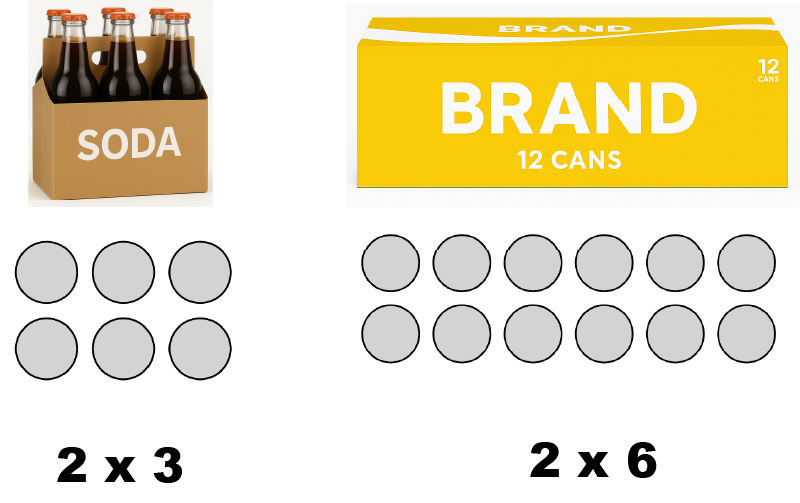
Another popular product configuration is the four-pack. Certain soda manufacturers make these configurations available.
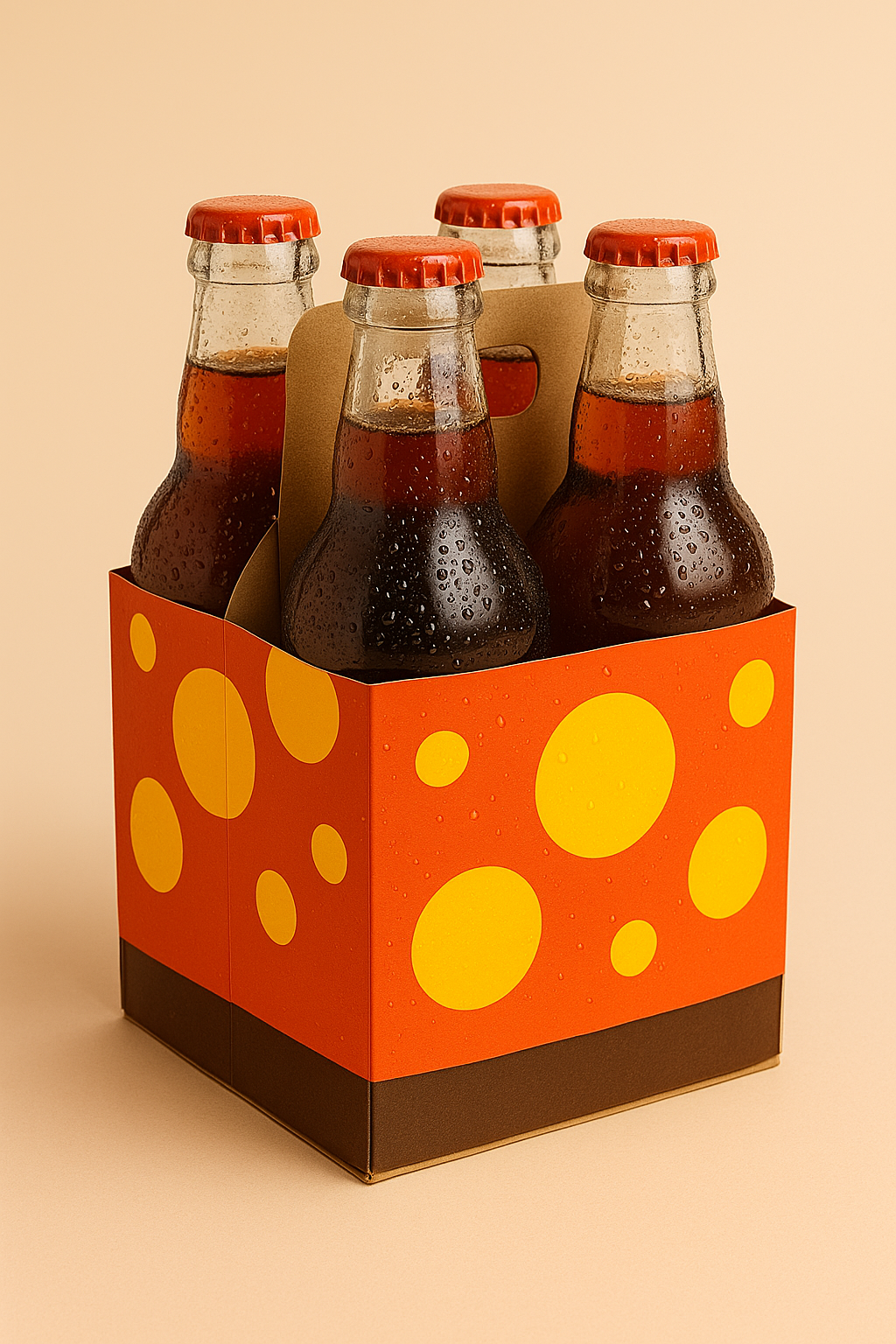
Notice a pattern with the numbers? Look at the factors of 24, which is the number of sodas in a case of sodas, and you'll see the various smaller configurations.
Factors of 24: 1, 2, 4, 3, 6, 8, 12, 24
But grocery stores don't buy 6-packs or even 12-packs. Groceries purchase pallets of sodas and these pallets are delivered by truck from a warehouse. Inside the pallets you will find multples of 6- and 12-packs.
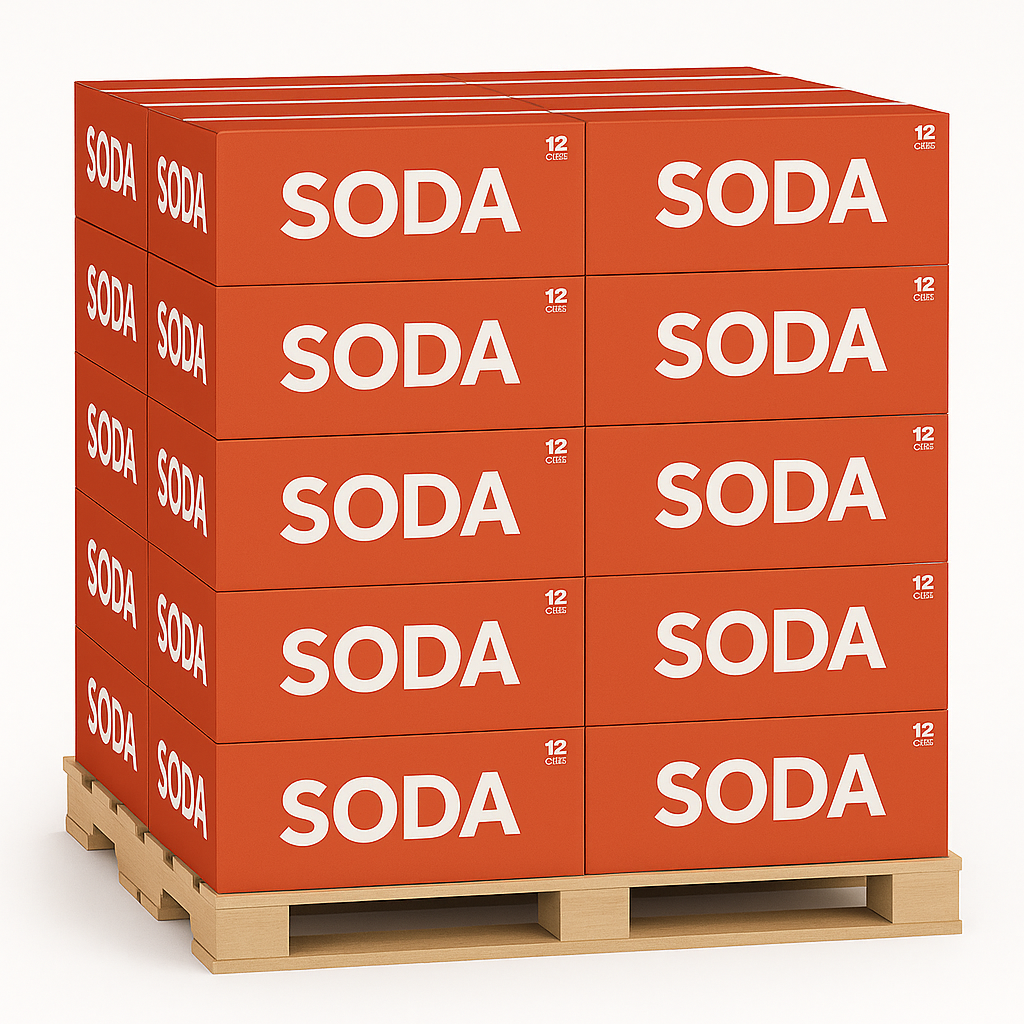
Watch this video to see how 6-packs are assembled.
Video: See how six packs of sodas are packaged: https://www.youtube.com/watch?v=lwiBvGUbbOQ
Retailers and manufacturers don’t choose multiples of 6-packs by accident. Composite numbers:
There’s a logistical elegance to composite numbers that primes can’t match. Even e-commerce sellers like Amazon and Thrive Market offer bundles in 6s, 12s, or 24s. That’s not marketing—that’s math.
What About Those Plastic Holders?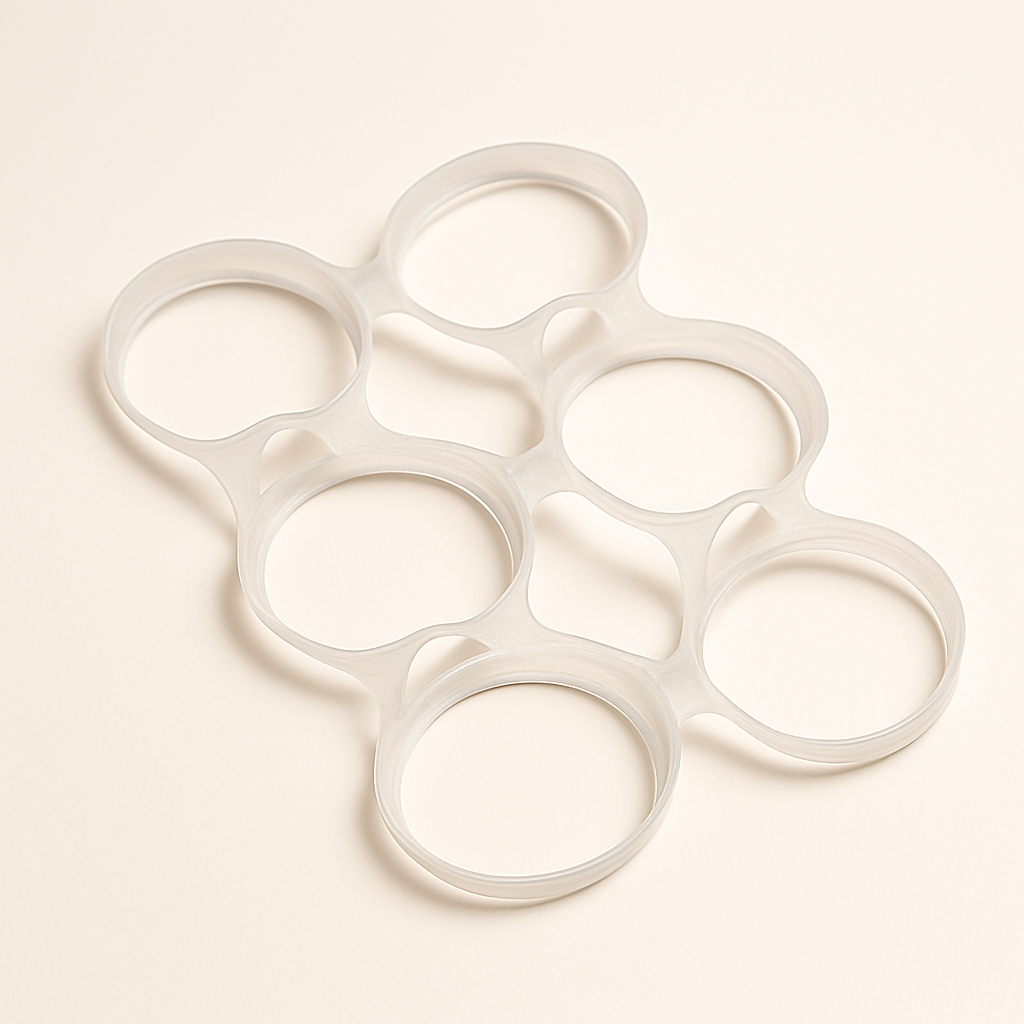
Those familiar plastic rings that hold six-packs together? They’re a major environmental concern. These rings, made of photodegradable plastic, can persist in the environment for years and pose a serious threat to wildlife—especially marine animals that can become entangled in them. In response, many beverage companies are exploring alternatives. Some now use cardboard carriers or compostable materials. Others have redesigned the rings to be photodegradable and wildlife-safe. Still, environmental groups continue to push for legislation that bans traditional plastic rings altogether. The math of packaging doesn’t stop at efficiency. It’s also about impact—and composite numbers may guide the count, but materials shape the outcome. |
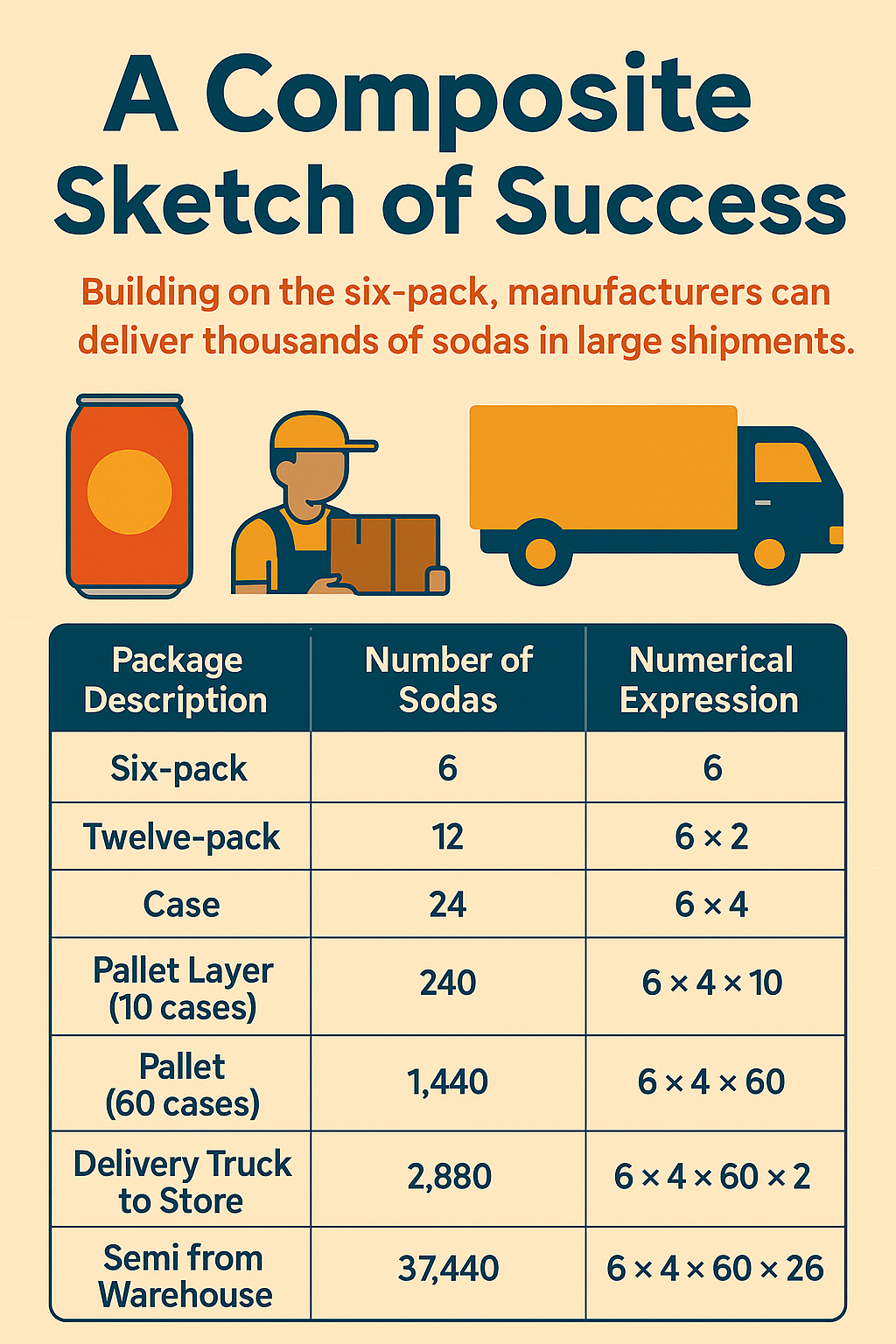
Step into any warehouse, delivery truck, or retail aisle, and you’ll see one quiet concept at work: composite numbers. These numbers, with their multiple factors, provide the mathematical skeleton for the modern supply chain. Consider a standard soda shipment: 6 cans per pack, 4 packs per case, 10 cases per pallet layer, 6 layers per pallet, and 26 pallets per truck. Each grouping relies on numbers that divide evenly—composite numbers—to ensure packages can be stacked, split, counted, and delivered with precision. So next time you open a 12-pack of your favorite drink, remember: you’re holding a lesson in number theory—and the blueprint for a global supply chain.
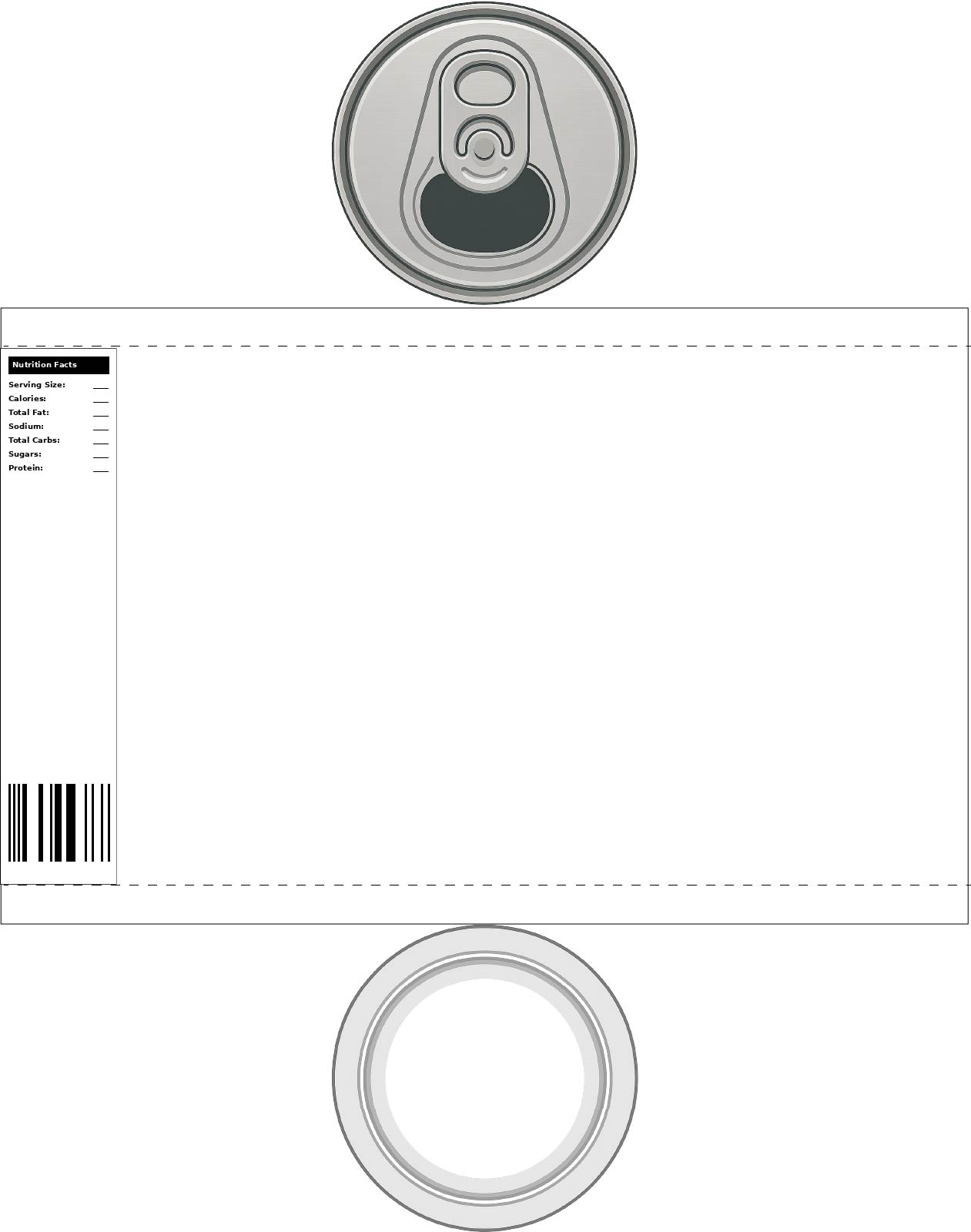
Create your own soft drink and create a design for the soda can. Using a printable net, decorate a flat template and wrap it into a 3D model of a soda can.
Step 1: Print the Soda Can Net
Use the template below to print a blank soda can net on standard 8.5 × 11 inch paper. Cut along the outer lines and fold to prepare it for labeling and assembly.
Download the Soda Can Net (PDF)
Step 2: Create Your Own Design
Using markers, pens, or digital tools, design your own soda brand. Decorate the label area with:
Stay within the dashed border.
Step 3: Wrap and Display
Cut out the net and wrap and tape it or glue it together to create the designed can. Or wrap the designed label around an actual soda can. Use glue or tape to hold it in place.
See the Example Below
Here’s a sample student-created soda design called Zap Fizz. On the left is the flat label design, and on the right is the wrapped version.
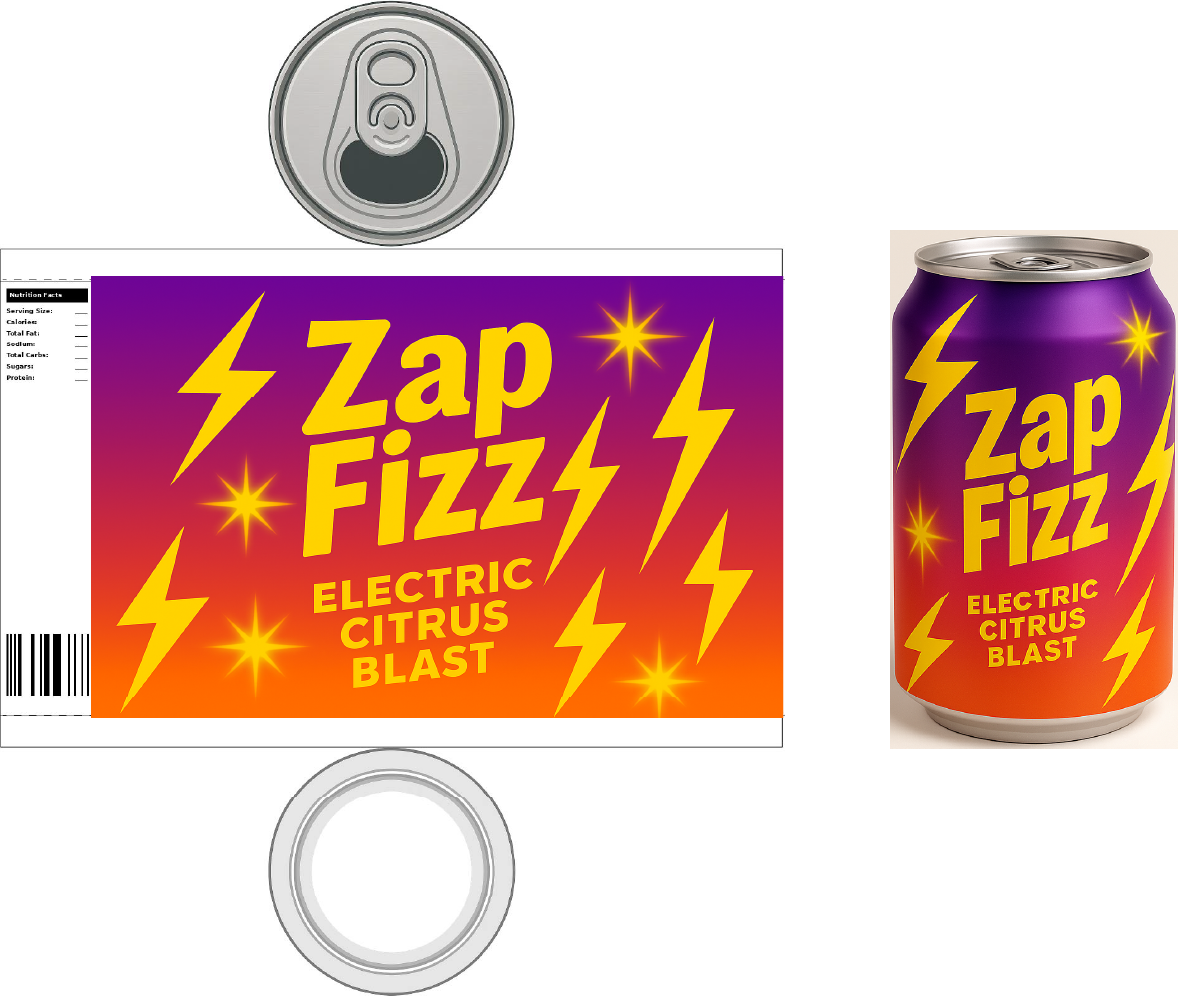
What is your soft drink about? What is your brand about? Describe how your design describes your brand.